By HIGHLAND Spices – Celebrating the Heritage of Indian Spices
Cloves are among the world’s most distinctive and aromatic spices. Known for their warm fragrance, intense flavour and naturally occurring essential oils, they have been valued in traditional food cultures and international spice markets for centuries.
From their unusual botanical structure to their rich chemical composition, cloves have several interesting characteristics that make them an important agricultural and commercial spice. Their quality is influenced by the growing environment, maturity at harvest, drying methods, essential-oil composition and storage conditions.
Let’s explore ten important facts about cloves and understand the science behind their distinctive identity.
1. Cloves Are Unopened Flower Buds
One of the most interesting facts about cloves is that the spice is actually the dried, unopened flower bud of an evergreen tropical tree.
- Botanical name: Syzygium aromaticum
- Plant family: Myrtaceae
- Plant type: Evergreen perennial tree
- Commercial spice: Dried unopened flower buds
The clove tree produces clusters of flower buds at the ends of its branches. These buds are harvested before flowering and carefully dried to produce the familiar nail-shaped spice.
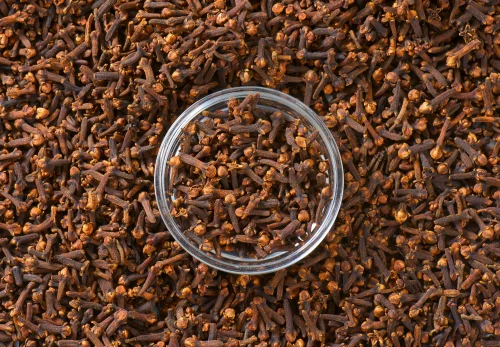
A whole clove consists of a rounded flower head and a narrow stem-like portion. Its characteristic structure, brown colour and strong fragrance make it easily recognisable.
Unlike spices obtained from seeds, roots or bark, cloves are valued for their unopened flower buds.
2. Eugenol Is Responsible for the Characteristic Clove Aroma
The distinctive fragrance of cloves is largely associated with eugenol, a naturally occurring aromatic compound belonging to the phenylpropanoid group.
Its chemical formula is C₁₀H₁₂O₂.
Eugenol contributes to the warm, sweet, spicy and slightly woody aroma that makes cloves instantly recognisable. It is also an important constituent of clove essential oil.
Scientific analyses have shown that eugenol can account for approximately 70–85% or more of the essential oil in certain clove bud oil samples. The actual proportion varies according to the sample, growing conditions, maturity, processing and extraction method.
It is important to distinguish between the composition of essential oil and the composition of the entire dried clove. These percentages refer to the extracted oil, not the weight of the whole spice.
3. Clove Essential Oil Contains Several Natural Aromatic Compounds
Although eugenol is the dominant aromatic compound, clove essential oil contains several other naturally occurring constituents.
Some important compounds include:
- Eugenol: The principal aromatic phenolic compound.
- Eugenyl acetate: An aromatic ester contributing to the fragrance profile.
- Beta-caryophyllene: A naturally occurring sesquiterpene.
- Alpha-humulene: A sesquiterpene found in clove oil.
- Caryophyllene oxide: Another compound that may occur in the oil.
The proportions of these constituents vary with the plant material and extraction conditions.
Together, these compounds contribute to the complex aroma and characteristic flavour profile of cloves.
4. Cloves Are Harvested Before the Flowers Open
Clove cultivation requires careful attention to the development of flower buds.
The buds initially appear green and gradually develop a pinkish or reddish colour as they mature. They are generally harvested when fully developed but still unopened.
The harvesting stage is important because the maturity of the flower buds can influence their physical quality and essential-oil composition.
A typical harvesting process involves:
- Selecting mature flower clusters.
- Harvesting the unopened flower buds.
- Separating buds from unwanted plant material.
- Spreading the buds for drying.
- Turning and monitoring them for uniform drying.
- Cleaning, grading and packing the dried cloves.
Careful harvesting helps preserve the natural shape and commercial value of the spice.
5. Drying Develops the Familiar Brown Colour of Cloves
Freshly harvested clove buds are generally green to pinkish-red. Their familiar brown appearance develops during the drying process.
Drying reduces the moisture content and helps prepare the buds for storage. As moisture is removed, the tissues shrink and the colour gradually changes.
Proper drying is essential for:
- Reducing excess moisture.
- Developing the characteristic brown appearance.
- Maintaining the natural aromatic profile.
- Improving storage stability.
- Reducing the risk of mould and deterioration.
Traditional sun-drying and other controlled drying methods are used depending on the production system and prevailing conditions.
The process needs to be managed carefully. Insufficient drying can affect storage stability, while excessive heat may alter the aromatic constituents.
6. Cloves Contain Naturally Occurring Phenolic Compounds
Cloves are known for their rich content of naturally occurring phytochemicals, particularly phenolic compounds.
Eugenol is one of the most prominent examples. Other phenolic constituents and related compounds contribute to the chemical complexity of clove extracts.
Scientific studies have investigated clove extracts for antioxidant activity under laboratory conditions. These findings are of interest in food science and natural-product research.
However, laboratory antioxidant activity should not be interpreted as proof that consuming cloves prevents or treats diseases. The effects observed in extracts and experimental systems do not automatically translate into established health benefits in humans.
7. Cloves Are Cultivated in Tropical Growing Environments
The clove tree grows best in warm, humid tropical conditions.
Successful cultivation is influenced by several environmental and agricultural factors:
- Suitable temperature conditions.
- Well-distributed rainfall.
- Adequate soil moisture.
- Good soil drainage.
- Suitable soil depth and fertility.
- Appropriate shade and plantation management.
Clove trees generally prefer humid environments and well-drained soils. Waterlogging and prolonged moisture stress can affect plant development and productivity.
In India, clove cultivation is associated particularly with the hilly regions of Kerala, Tamil Nadu and Karnataka.
Idukki is part of Kerala’s important high-range spice-growing landscape, where plantation agriculture contributes to the region’s agricultural identity.
8. Clove Quality Is Determined by Several Scientific Parameters
The quality of whole cloves cannot be judged by appearance alone. Commercial assessment considers physical characteristics, chemical composition and hygiene-related parameters.
Some important quality indicators include:
Moisture content: Indicates the amount of water remaining in dried cloves and helps assess storage suitability.
Volatile oil content: Measures the quantity of aromatic oil recoverable using a specified analytical method.
Eugenol concentration: Indicates the proportion of the principal aromatic compound in the extracted essential oil.
Bud size and appearance: Helps evaluate physical uniformity and commercial presentation.
Extraneous matter: Measures unwanted material such as dust, stems and other foreign matter.
Damaged and headless buds: Helps assess the physical condition and grading quality.
FSSAI reference standards for whole cloves
The cited FSSAI Food Safety and Standards Regulations specify the following requirements for whole cloves:
| Quality parameter | Specified limit |
| Extraneous matter | Maximum 1.0% |
| Tendrils and mother cloves | Maximum 2.0% |
| Khokar cloves | Maximum 2.0% |
| Moisture | Maximum 12.0% |
| Volatile oil, on dry basis | Minimum 17.0% v/w |
| Headless cloves | Maximum 2.0% |
| Insect-damaged cloves | Maximum 2.0% |
These figures are regulatory reference limits from the cited standard, not actual test results for any particular product or batch. Applicable current requirements should be verified before using them in commercial specifications.
9. Clove Bud Oil, Leaf Oil and Stem Oil Have Different Compositions
Essential oil can be extracted from different parts of the clove tree.
The three commonly recognised sources are:
- Clove bud oil: Extracted from dried flower buds.
- Clove leaf oil: Extracted from the leaves.
- Clove stem oil: Extracted from the stems associated with the flower clusters.
Although all three originate from the same botanical species, their chemical compositions can differ.
Clove bud oil is particularly valued for its characteristic fragrance and eugenol-rich composition. Leaf and stem oils can also contain substantial amounts of eugenol, but their relative proportions of other constituents may differ.
The plant part used and the extraction method therefore play important roles in determining the final oil profile.
10. Whole Cloves Help Retain Their Natural Aroma
Cloves contain volatile aromatic compounds that can gradually be lost or altered when exposed to air, heat, light and unsuitable storage conditions.
Grinding increases the exposed surface area of the spice, making its aromatic compounds more vulnerable to loss.
Keeping cloves whole helps protect their natural structure and aromatic constituents until they are required.
For better storage:
- Store whole cloves in a clean, airtight container.
- Keep them away from moisture and direct sunlight.
- Avoid prolonged exposure to heat.
- Close the container properly after use.
- Protect them from strong external odours.
Proper storage helps preserve the natural fragrance, appearance and overall quality of whole cloves.
The Importance of Cloves in India’s Spice Heritage
Cloves hold an important position in India’s spice-growing and trading heritage. Their cultivation is associated with several tropical and high-range agricultural regions, particularly in southern India.
Idukki, with its plantation landscape and long-standing association with spice cultivation, forms part of Kerala’s agricultural identity.
The quality of cloves depends on several interconnected factors, including the growing environment, maturity at harvest, essential-oil composition, drying, cleaning and storage. Understanding these factors helps customers appreciate why carefully selected and properly handled whole spices matter.
At HIGHLAND Spices, we celebrate the natural character of Indian-grown spices and the agricultural heritage of Kerala’s high ranges. Our focus is on bringing carefully selected whole spices closer to customers who appreciate authentic aroma, flavour and freshness.
HIGHLAND Spices – Bringing the natural richness of Kerala’s spice-growing heritage to your home.