
An Essential Sourcing Checklist for Retailers, Wholesalers & International Importers
Black Pepper, widely known as the King of Spices, is one of the most commercially important and extensively traded spices in the global spice industry. Recognised for its distinctive pungency, warm flavour and characteristic aroma, black pepper has remained an essential ingredient in international food markets for centuries.
Among the different geographical varieties available in the global market, Malabar Black Pepper from Kerala, India, holds a distinguished position because of its historical significance, geographical identity and association with the traditional pepper-growing regions of the Western Ghats.
From premium seasoning blends and gourmet food products to spice processing, food manufacturing and international retail distribution, the quality of black pepper directly influences the flavour profile, consistency and commercial value of finished products.
For retailers, wholesalers, distributors and international importers, purchasing black pepper is much more than a price-based procurement decision. Factors such as geographical origin, peppercorn size, bulk density, piperine content, moisture, volatile oil, processing methods, cleanliness and packaging collectively determine the suitability of a particular consignment.
Selecting the right Malabar Black Pepper supplier in India is therefore an important business decision that influences product quality, customer satisfaction, regulatory compliance and long-term sourcing reliability.
At HIGHLAND Spices, our roots are in the high ranges of Idukki, Kerala, where spice cultivation is closely connected with the agricultural heritage of the Western Ghats. We believe that informed buyers make better sourcing decisions.
This comprehensive buyer’s guide explains ten important factors that retailers, wholesalers and importers should evaluate before choosing a black pepper supplier in India.
Why India Is an Important Source of Malabar Black Pepper
India has a long-established association with black pepper cultivation and international spice trading. Historically, pepper from the Malabar region of Kerala played a significant role in the development of the global spice trade.
The Western Ghats provide suitable agro-climatic conditions for pepper cultivation, including tropical rainfall patterns, humidity, well-drained soils and diverse growing environments.
The traditional pepper-growing regions of Kerala, including Idukki, Wayanad, Kozhikode and adjoining areas, contribute to India’s black pepper production.
Indian black pepper is commercially valued for several characteristics:
- Distinctive Pungency: Associated primarily with the naturally occurring alkaloid piperine.
- Characteristic Aroma: Influenced by volatile oil constituents such as β-caryophyllene, limonene and other aromatic compounds.
- Natural Appearance: Proper harvesting and processing help maintain the characteristic dark colour of dried peppercorns.
- Commercial Size Grades: Available in different size classifications to meet buyer specifications.
- Established Geographical Identity: Malabar Black Pepper has a recognised GI identity associated with its designated geographical region.
For buyers seeking authentic Indian black pepper, understanding its geographical origin and commercial specifications is an essential starting point.
1. Verify the Geographical Origin and Authenticity of Malabar Black Pepper
The geographical origin of black pepper is one of the most important factors to consider when selecting a supplier.
Peppercorn characteristics can vary depending on the growing region, soil conditions, climate, cultivation practices, harvesting maturity and post-harvest processing.
Malabar Black Pepper is particularly associated with the historical pepper-growing belt of Kerala’s Malabar region and its recognised geographical identity.
Why Geographical Origin Matters
Knowing where your black pepper originates helps establish:
- Authenticity and geographical identity.
- Better understanding of the product’s agricultural background.
- Transparency in sourcing.
- Improved supply-chain traceability.
- Confidence in product specifications.
- Greater credibility when marketing origin-specific spices.
What Retailers and Importers Should Check
Before selecting a supplier, ask:
- Is the geographical origin clearly identified?
- Can the supplier establish the sourcing region?
- Is batch-level traceability maintained?
- Is the product eligible for the relevant GI designation?
- Is the supplier authorised to use the GI designation, where applicable?
- Can supporting documentation be provided?
HIGHLAND Spices Assurance
HIGHLAND Spices is rooted in Manjapetty, Nedumkandam, in Udumbanchola Taluk of Idukki District, Kerala.
Our Malabar Black Pepper is associated with the traditional pepper-growing heritage of the Western Ghats. As a GI-authorised user of Malabar Black Pepper, we place importance on geographical authenticity, product identity and responsible sourcing.
For us, origin is not merely a geographical description; it is an important part of the identity and value of the spice.
2. Understand Black Pepper Grades and Peppercorn Size
Grading is an important consideration when purchasing black pepper in commercial quantities.
Black pepper is commonly classified according to physical characteristics, including peppercorn diameter, size distribution, density, colour and the proportion of light or defective berries.
Commercial grades may vary according to the specifications followed by individual suppliers and international buyers.
Common Commercial Black Pepper Grades
Some widely used commercial size classifications include:
- TGSEB – Tellicherry Garbled Special Extra Bold: A premium size classification generally associated with larger peppercorns, commonly specified at approximately 4.75 mm and above.
- MG1 – Malabar Garbled Grade 1: A recognised commercial Malabar pepper grade, with size and quality parameters subject to applicable specifications.
- TGEB – Tellicherry Garbled Extra Bold: A commercial classification for extra-bold peppercorns, with specifications depending on the buyer and supplier.
- Other Commercial Grades: Different size and quality categories are available depending on market requirements.
It is important to distinguish between traditional commercial grade names and the actual measurable specifications agreed upon in a purchase contract.
Why Grading Matters for Retailers
Consistent grading provides several commercial advantages:
- Uniform appearance in retail packaging.
- Better visual presentation.
- Consistent product specifications.
- Easier inventory classification.
- Improved control over procurement.
- Better suitability for different food manufacturing applications.
Larger peppercorns are often preferred in premium whole-spice retail segments because of their appearance. However, size alone does not establish pungency, piperine concentration or overall quality.
What Buyers Should Ask Suppliers
- Is grading based on actual peppercorn diameter?
- What are the minimum size specifications?
- Is the product machine-cleaned and graded?
- What percentage of light berries and broken peppercorns is permitted?
- Are foreign matter and defective berries controlled?
- Can the supplier provide a representative sample of the actual grade?
HIGHLAND Spices Assurance
At HIGHLAND Spices, we understand that grading consistency is important for retailers, wholesalers and international importers.
We emphasise careful selection, cleaning and grading of Malabar Black Pepper according to commercial requirements, with attention to peppercorn size, physical appearance, density and batch consistency.
3. Examine Piperine Content and Natural Pungency
Piperine is one of the most important naturally occurring chemical constituents responsible for the characteristic pungency of black pepper.
It belongs to a group of compounds known as alkaloids and contributes significantly to the distinctive sharp, warm and penetrating taste associated with pepper.
For food manufacturers, spice processors and international bulk buyers, piperine content can be an important parameter when evaluating black pepper.
Why Piperine Matters
Piperine concentration is influenced by several factors, including:
- Pepper variety and genetic characteristics.
- Growing environment.
- Fruit maturity.
- Harvesting conditions.
- Drying and processing.
- Storage duration and conditions.
What Buyers Should Understand
A visually attractive peppercorn does not necessarily have the highest piperine concentration.
Similarly, a larger peppercorn is not automatically more pungent than a smaller one.
For buyers who require specific pungency specifications, laboratory analysis is the most reliable way to evaluate piperine content.
What to Ask Your Supplier
- Is piperine content tested?
- Is the result expressed as a percentage?
- Is the analysis conducted using a recognised laboratory method?
- Does the Certificate of Analysis correspond to the supplied batch?
- Are agreed piperine specifications maintained across repeat orders?
HIGHLAND Spices Assurance
At HIGHLAND Spices, we recognise that natural pungency is a defining characteristic of premium black pepper.
We place importance on the natural flavour characteristics of Malabar Black Pepper and support quality evaluation through appropriate product specifications and laboratory testing where required.
4. Evaluate Cultivation Practices and Harvesting Methods
Black pepper quality begins with the cultivation practices followed in the plantation.
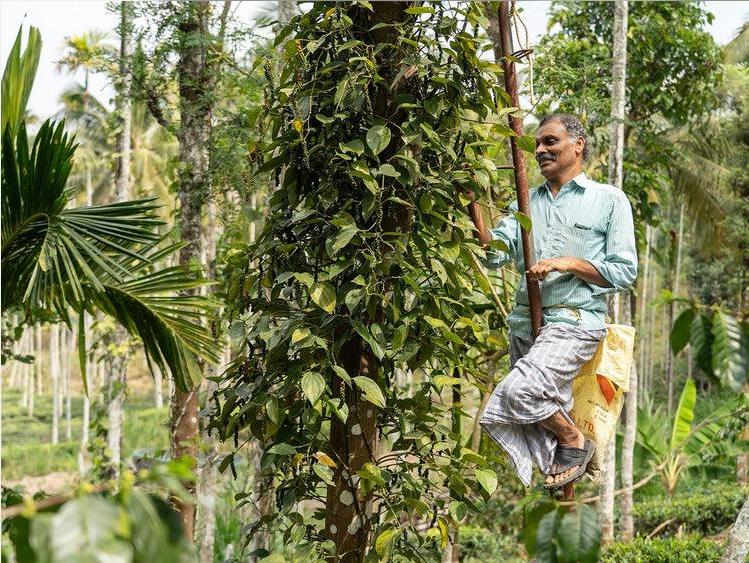
Black pepper, botanically known as Piper nigrum L., is a perennial climbing vine belonging to the Piperaceae family.
It is generally cultivated as a vine using living or artificial support systems, particularly in tropical regions with suitable rainfall, humidity and soil conditions.
Why Cultivation Practices Matter
Agricultural practices influence plant health, fruit development and the quality of harvested pepper.
Important cultivation considerations include:
- Suitable climatic conditions.
- Well-drained and fertile soil.
- Appropriate shade and support systems.
- Balanced nutrient management.
- Responsible pest and disease management.
- Timely harvesting.
Understanding Black Pepper Harvesting
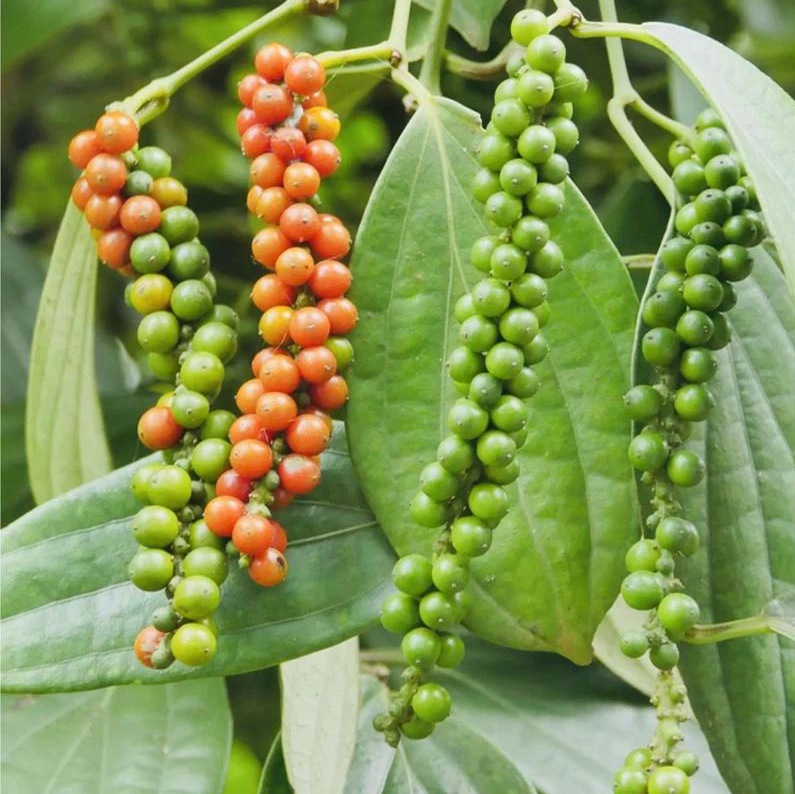
Black pepper grows in elongated fruiting spikes known as spikes or catkins.
Each spike contains several small fruits, commonly called pepper berries or peppercorns after drying.
For the production of black pepper, the berries are generally harvested when they reach the appropriate maturity stage, commonly indicated by the development of yellow or reddish berries on the spike.
After harvesting, the berries undergo threshing, separation and drying to produce the familiar dried black peppercorns.
Why Harvesting Maturity Is Important
Harvesting at an appropriate maturity stage helps achieve:
- Better berry development.
- More uniform processing.
- Appropriate drying characteristics.
- Better control over the final product’s physical appearance.
- Consistency in commercial specifications.
What Buyers Should Verify
- What cultivation practices are followed?
- Is the sourcing region identified?
- Are responsible agricultural practices implemented?
- How is harvesting maturity determined?
- Are pesticide applications managed appropriately?
- Are residue testing facilities available?
HIGHLAND Spices Assurance
Our association with Idukki’s traditional spice-growing landscape gives us an appreciation of the agricultural knowledge involved in cultivating black pepper.
At HIGHLAND Spices, we value responsible sourcing, traditional agricultural practices and careful handling of pepper throughout the harvesting and procurement process.
5. Assess Drying, Cleaning and Post-Harvest Processing
Post-harvest processing has a significant influence on the final quality of black pepper.
Freshly harvested pepper berries contain substantial natural moisture and cannot be stored safely for extended periods without suitable processing.
Proper drying, cleaning and grading are essential to obtain a stable commercial product.
Important Stages of Black Pepper Processing
1. Harvesting and Collection
Mature pepper spikes are harvested and collected for further processing.
2. Threshing
The berries are separated from the spikes using suitable threshing methods.
3. Cleaning and Separation
Stalks, leaves, immature berries and other unwanted materials are removed.
4. Drying
The separated pepper berries are dried under appropriate conditions to reduce moisture content and develop the characteristic dried appearance.
5. Cleaning and Grading
Dried peppercorns are cleaned and graded according to size, density and applicable commercial specifications.
6. Final Inspection
The finished product is examined for foreign matter, defective berries, broken material and other quality parameters.
Why Processing Matters
Improper post-harvest handling may result in:
- Uneven moisture content.
- Mould development.
- Unwanted odours.
- Discolouration.
- Increased broken material.
- Reduced storage stability.
What Buyers Should Check
- What drying method is followed?
- Is drying uniform?
- Is the final moisture content tested?
- Are stalks and foreign matter removed?
- Are light berries separated?
- Is batch-wise quality inspection maintained?
HIGHLAND Spices Assurance
At HIGHLAND Spices, we recognise that the quality of black pepper depends on careful post-harvest handling.
Our focus extends across selection, cleaning, drying, grading and final inspection to maintain the characteristic appearance and natural aromatic properties of Malabar Black Pepper.
6. Verify Moisture Content, Bulk Density and Physical Quality
Moisture content and bulk density are important technical parameters for evaluating black pepper in bulk procurement.
These measurements help buyers understand the physical characteristics and storage suitability of the product.
A. Moisture Content
Moisture content refers to the amount of water present in the dried peppercorns.
Excessive moisture may increase the risk of mould growth and deterioration during storage.
Appropriate drying and storage practices are therefore essential.
What buyers should verify:
- Moisture percentage.
- Laboratory testing method.
- Batch-wise test results.
- Consistency across supplied consignments.
A maximum moisture specification of around 12% is commonly encountered in black pepper trade requirements, although the exact acceptable limit must be determined by the applicable standard, contract and destination-market regulations.
B. Bulk Density
Bulk density refers to the mass of peppercorns occupying a given volume, generally expressed in grams per litre (g/L) or kilograms per cubic metre (kg/m³).
It is an important parameter in the commercial evaluation of whole black pepper.
Higher bulk density generally indicates a greater proportion of well-developed, heavier peppercorns within a measured volume, although it should not be treated as a standalone measure of overall quality.
Why bulk density matters:
- Helps evaluate the physical composition of a lot.
- Supports comparison between commercial grades.
- Provides useful information for bulk procurement.
- Helps buyers assess consistency across batches.
C. Extraneous Matter
Extraneous matter includes unwanted materials such as stalks, leaves, dust, stones and other foreign substances.
Low extraneous matter is important for food safety, processing efficiency and finished-product quality.
HIGHLAND Spices Assurance
At HIGHLAND Spices, we understand the importance of measurable quality parameters in commercial spice procurement.
We emphasise product cleanliness, appropriate moisture management and physical quality assessment, with laboratory analysis available according to applicable buyer requirements.
7. Understand Essential Oil Content and Natural Aroma
The characteristic aroma of black pepper is primarily associated with its volatile essential oil constituents.
These compounds contribute to the distinctive warm, woody, spicy and fresh aromatic profile of black pepper.
Important Aromatic Constituents of Black Pepper
Some important volatile compounds include:
- β-Caryophyllene: An important sesquiterpene contributing woody and spicy aromatic notes.
- Limonene: Associated with fresh citrus-like notes.
- Sabinene: Contributes to the complex aromatic profile.
- α-Pinene: Associated with fresh, resinous aromatic characteristics.
- δ-3-Carene: Another naturally occurring terpene found in pepper essential oil.
The proportions of these constituents can vary depending on geographical origin, variety, maturity, processing and storage.
Why Essential Oil Content Matters
Essential oil analysis can be useful for:
- Spice extract manufacturers.
- Food processing industries.
- Seasoning manufacturers.
- Flavour and fragrance applications.
- Buyers with defined aroma specifications.
It is important to distinguish between piperine and volatile oil content. Piperine is primarily associated with pungency, whereas essential oils contribute substantially to the aroma profile.
What Buyers Should Request
- Volatile oil analysis.
- Piperine analysis.
- Batch-specific Certificate of Analysis.
- Appropriate sampling and testing methodology.
HIGHLAND Spices Assurance
At HIGHLAND Spices, we value the naturally pungent and aromatic characteristics that make Malabar Black Pepper distinctive.
Our emphasis on careful selection, processing and suitable storage is intended to preserve the natural qualities of whole black peppercorns.
8. Examine Certifications, GI Recognition and Food Safety Compliance
Certifications and regulatory documents are important considerations for retailers, wholesalers and international importers.
They help establish product identity, supplier credibility and compliance with applicable market requirements.
Important Certifications and Documentation
Geographical Indication (GI)
Malabar Pepper is a registered Geographical Indication associated with its recognised geographical origin.
GI recognition establishes a link between the product and its designated geographical area, subject to applicable registration conditions.
Buyers should verify the supplier’s authorisation to use the GI designation rather than assuming that every peppercorn marketed as Malabar Pepper automatically qualifies.
Food Safety Compliance
Suppliers should maintain the applicable food safety registrations, licences and regulatory compliance documentation relevant to their business operations.
Pesticide Residue Analysis
Pesticide residue testing is especially important for international shipments and buyers operating under strict maximum residue limits.
Quality Analysis Reports
Depending on the buyer’s specifications, laboratory analysis may include:
- Moisture content.
- Piperine percentage.
- Volatile oil content.
- Bulk density.
- Extraneous matter.
- Pesticide residues.
- Microbiological parameters, where required.
Export Documentation
International buyers should confirm the availability of relevant commercial invoices, packing lists, origin documents, Certificates of Analysis and other applicable shipment documentation.
HIGHLAND Spices Assurance
HIGHLAND Spices is a Trade Mark Registered Brand and a GI-authorised user of Malabar Black Pepper.
We believe that authenticity, geographical identity and transparency are important foundations of a reliable spice supply relationship.
Our approach focuses on maintaining product identity and supporting applicable food safety, quality and regulatory requirements.
9. Evaluate Packaging, Storage and Shelf-Life Management
Packaging is an essential component of black pepper quality preservation.
Although dried black pepper has relatively good storage stability when handled correctly, exposure to moisture, air, heat, light and unsuitable storage environments can gradually affect its natural characteristics.
What Makes Good Black Pepper Packaging?
Moisture Protection
Packaging should help prevent moisture absorption during storage and transportation.
Aroma Preservation
Suitable packaging materials help reduce the loss of volatile aromatic compounds.
Contamination Protection
Food-grade packaging should protect peppercorns from external contamination.
Packaging Integrity
Proper sealing helps preserve product quality during handling and distribution.
Packaging Options for Commercial Buyers
Depending on the order quantity and business requirements, black pepper may be supplied in:
- Retail-ready consumer packs.
- Food-grade airtight containers.
- Bulk food-grade bags.
- Export-oriented packaging.
- Customised private-label packaging.
Storage Conditions to Consider
Black pepper should be stored in a clean, dry and well-ventilated environment, away from direct sunlight, excessive heat and moisture.
Proper storage helps maintain its characteristic aroma, pungency and physical quality.
HIGHLAND Spices Assurance
At HIGHLAND Spices, we understand the importance of suitable packaging and storage in preserving whole black pepper.
We focus on appropriate packaging solutions that help protect the natural characteristics of Malabar Black Pepper from processing to final delivery.
10. Assess Supplier Reliability, Bulk Supply Capacity and Logistics
A reliable supplier is an important business partner for any retailer, wholesaler or importer.
Even when a product meets the required quality specifications, inconsistent supply, poor communication or inadequate logistics can affect the buyer’s business operations.
Why Supplier Reliability Matters
A dependable supplier helps businesses:
- Maintain uninterrupted inventory.
- Plan regular procurement.
- Manage repeat orders.
- Maintain consistent product specifications.
- Coordinate domestic and international shipments.
- Reduce sourcing-related uncertainty.
Questions to Ask Before Selecting a Supplier
- Can the supplier handle wholesale and bulk quantities?
- Are repeat orders supported?
- Can the same commercial specifications be maintained across batches?
- Are product samples available before bulk procurement?
- Is batch identification maintained?
- Can the supplier provide a Certificate of Analysis?
- Does the supplier support export documentation?
- Are delivery schedules and commercial terms clearly defined?
HIGHLAND Spices Assurance
HIGHLAND Spices is committed to building long-term business relationships with retailers, wholesalers, distributors and international buyers.
We understand that commercial buyers require more than a quality product. They need clear communication, dependable procurement arrangements and appropriate product documentation.
Our objective is to support customers seeking authentic whole spices from the high ranges of Kerala through quality-focused sourcing and customer-oriented service.
A Practical Malabar Black Pepper Supplier Evaluation Checklist
Before confirming your next wholesale or import order, use this checklist to evaluate your prospective supplier.
| Evaluation Parameter | What Buyers Should Verify |
| Geographical Origin | Authentic Malabar geographical identity |
| GI Recognition | Applicable GI registration and authorisation |
| Commercial Grade | MG1, TGSEB or agreed specifications |
| Peppercorn Size | Diameter and size distribution |
| Physical Appearance | Uniformity and natural dark colour |
| Pungency | Piperine content, where specified |
| Aroma | Characteristic natural pepper fragrance |
| Moisture | Batch-wise moisture analysis |
| Bulk Density | Consistent physical quality |
| Volatile Oil | Laboratory analysis, where required |
| Extraneous Matter | Cleanliness and foreign matter limits |
| Processing | Appropriate drying and cleaning |
| Food Safety | Applicable licences and compliance |
| Packaging | Food-grade and moisture-resistant materials |
| Traceability | Batch identification and sourcing details |
| Supply Capacity | Bulk and repeat-order capability |
| Logistics | Reliable dispatch and delivery arrangements |
A supplier who can demonstrate these parameters through samples, clearly defined specifications and supporting documentation is generally better positioned to support long-term commercial procurement.
Why Choose HIGHLAND Spices as Your Malabar Black Pepper Supplier?
Selecting the right black pepper supplier is about finding a sourcing partner who understands product authenticity, geographical identity, quality specifications and the expectations of modern spice buyers.
HIGHLAND Spices combines the traditional spice-growing heritage of Idukki with a quality-focused approach to whole-spice sourcing.
What Makes HIGHLAND Spices Different?
1. Authentic Kerala Spice Heritage
Our roots are in Idukki, Kerala, a region closely associated with the cultivation of premium whole spices in the Western Ghats.
2. GI-Authorised Malabar Black Pepper
Our Malabar Black Pepper carries the significance of its recognised geographical identity, supported by our GI-authorised user status.
3. Carefully Selected Whole Peppercorns
We emphasise product selection, cleaning, grading and physical quality to meet commercial requirements.
4. Quality-Focused Processing
Attention to harvesting, drying, cleaning and packaging helps preserve the natural characteristics of black pepper.
5. Retail and Wholesale Sourcing
We understand the procurement requirements of retailers, distributors, wholesalers and bulk buyers.
6. A Commitment to Authenticity
As a Trade Mark Registered Brand, HIGHLAND Spices is committed to building customer confidence through geographical identity, transparency and quality-focused sourcing.
Frequently Asked Questions About Buying Malabar Black Pepper in Bulk
1. Which is the best Malabar Black Pepper supplier in India?
The best supplier is one who can demonstrate authentic geographical origin, appropriate GI authorisation, consistent commercial grading, verified quality parameters, suitable packaging and reliable supply. Buyers should evaluate product samples and supporting documentation before confirming bulk orders.
2. What makes Malabar Black Pepper different from other black pepper varieties?
Malabar Black Pepper is associated with the recognised geographical identity of its designated region in Kerala. Its commercial identity is linked to the traditional pepper-growing heritage of the Malabar region and the distinctive characteristics of Indian black pepper.
3. What are MG1 and TGSEB black pepper grades?
MG1 refers to Malabar Garbled Grade 1, a recognised commercial grading classification. TGSEB refers to Tellicherry Garbled Special Extra Bold, a premium commercial size classification commonly associated with larger peppercorns. Actual specifications should be verified with the supplier.
4. What is the ideal moisture content of black pepper?
A moisture specification of around 12% maximum is commonly encountered in black pepper trade requirements. However, buyers should follow the applicable product standard, destination-market requirements and contractual specifications.
5. What is piperine in black pepper?
Piperine is a naturally occurring alkaloid that contributes to the pungency of black pepper. Its concentration varies depending on variety, growing conditions, maturity and processing. Laboratory testing is recommended when a specific piperine level is required.
6. What is bulk density in black pepper?
Bulk density is the mass of peppercorns occupying a specified volume. It is generally expressed in g/L or kg/m³ and is used as a physical quality parameter when evaluating commercial black pepper grades.
7. What documents should importers request from a black pepper supplier?
Depending on the destination market, importers may require a Certificate of Analysis, pesticide residue report, batch details, origin documentation, food safety compliance documents, commercial invoice, packing list and other applicable export documents.
8. Can retailers and wholesalers buy Malabar Black Pepper directly from Indian suppliers?
Yes. Retailers, wholesalers, distributors and importers can source Malabar Black Pepper directly from Indian spice suppliers. Direct procurement enables buyers to discuss grading, specifications, packaging, quantity, pricing and delivery requirements.
9. How should whole black pepper be stored?
Whole black pepper should be kept in an airtight container or suitable sealed food-grade packaging in a cool, dry place, away from moisture, excessive heat and direct sunlight.
10. Why should importers source Malabar Black Pepper from Kerala?
Kerala has a long association with black pepper cultivation and the international spice trade. Malabar Black Pepper’s recognised geographical identity and historical importance make it a distinctive sourcing option for buyers seeking authentic Indian pepper.
Final Thoughts: Choose Authenticity, Quality and Reliability
Black pepper is more than a widely traded spice. It represents a valuable agricultural product with a distinctive geographical identity, complex aromatic characteristics and important commercial applications.
For retailers, wholesalers, spice processors and international importers, selecting the right supplier requires careful evaluation of origin, grading, piperine, moisture, bulk density, essential oil, processing, packaging and supply reliability.
A dependable supplier should be able to demonstrate product authenticity, maintain clearly defined commercial specifications, provide appropriate quality documentation and support long-term procurement requirements.
At HIGHLAND Spices, we believe that exceptional spices begin with their origin. Rooted in the high ranges of Idukki, Kerala, we bring together the agricultural heritage of the Western Ghats and a commitment to authentic whole spices.
Whether you are a retailer looking for premium whole peppercorns, a wholesaler seeking consistent commercial grades, a food manufacturer requiring defined specifications or an international importer exploring authentic Indian spices, HIGHLAND Spices welcomes the opportunity to build a lasting business relationship.
Discover Authentic Malabar Black Pepper from HIGHLAND Spices
- GI-authorised Malabar Black Pepper.
- Authentic geographical identity.
- Carefully selected whole peppercorns.
- Quality-focused cleaning and grading.
- Attention to natural aroma and pungency.
- Sourcing solutions for retailers, wholesalers and importers.
HIGHLAND Spices – Pure. Proven. From the Highlands.